
Smart Conditions That Tell Your Team What to Ask for Next
Rapidio helps mortgage teams surface smart next-step requests earlier, reduce avoidable back-and-forth, and send cleaner files into underwriting.
Built for brokers, processors, underwriters, and ops teams that want cleaner submissions and faster decisions.
Trusted by Industry Leaders :

Most file delays start before underwriting
Files usually do not slow down because the team is lazy.
They slow down because key details are unclear, supporting documents are incomplete, and the next request is discovered too late. That creates avoidable back-and-forth, unnecessary suspense, and too many touches on the same file.
Smart Conditions help your team identify what needs attention earlier – so files move forward with fewer surprises.
What are Smart Conditions ?
Smart Conditions are targeted follow-up items generated from the actual income scenario, the uploaded documents, and the review logic behind the file.
Instead of a vague warning or a static checklist, Rapidio helps your team understand:
what may be missing
what may need clarification
what may not line up
what to request next before the file stalls
What your team can catch earlier
Missing income support
Spot when the file may need additional documentation to support the income picture.
Unclear pay trends
Surface follow-up items when year-to-date earnings, variable income, or recent history needs clarification.
Document-to-file mismatches
Bring attention to places where file data and uploaded documents may not fully align.
Self-employed follow-ups
Help teams identify likely next-step requests for more complex borrower income scenarios.
Bank statement review items
Highlight items that may need another look before the file goes deeper into underwriting.
Submission-readiness issues
Catch gaps earlier so the file reaches underwriting in a more complete state.
See How Smart Conditions Work Across Real Income Scenarios
-
Bank Statement Income Case
-
Self-Employed Income Case
- Wage-Earner Income Case
Surface the right follow-ups for non-traditional income workflows.
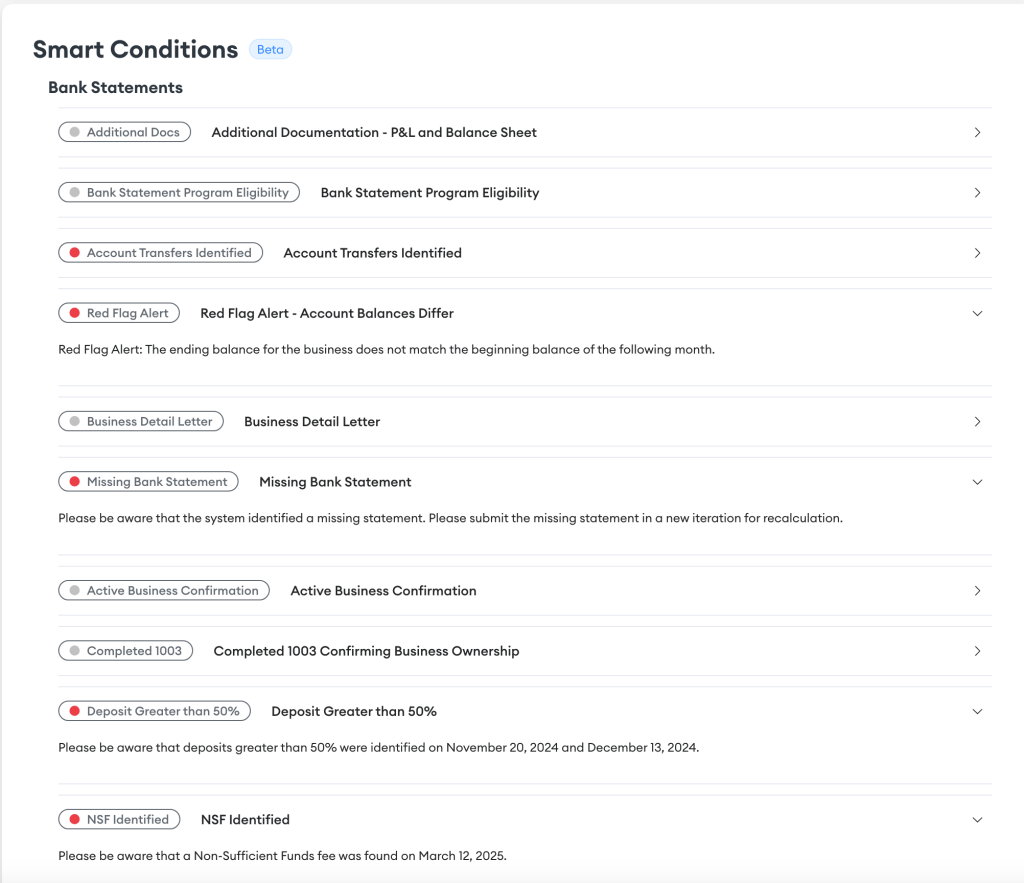
Rapidio helps teams identify likely documentation and review needs for bank statement loans before the file gets delayed.
Example Smart Conditions
Most Recent 12–24 Months of Bank Statements
Business Expense Ratio Review
Proof of Business Ownership
CPA / Tax Preparer Letter
Large Deposit Review
Missing or Incomplete Income Support
- Deposit greater than 50%
- NSFs Identified
- Provide P&L and Balance Sheet
Bring structure to the most documentation-heavy income scenarios.
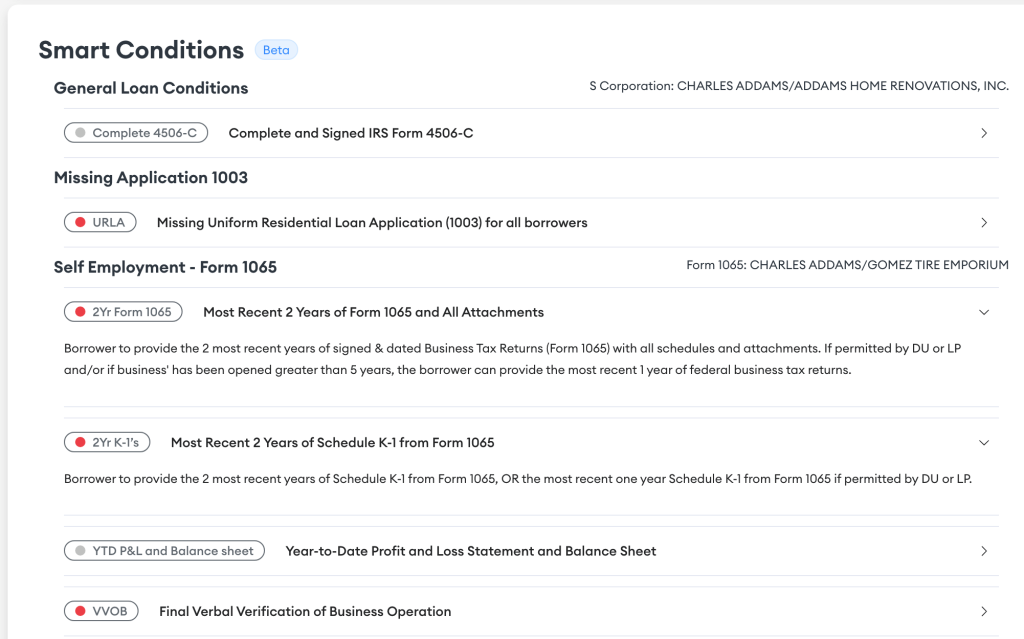
Rapidio helps your team identify likely follow-up items for self-employed borrowers, so complex files become easier to prepare and review.
Example Smart Conditions
Most Recent 2 Years of Form 1065
Most Recent 2 Years of Schedule K-1
Year-to-Date Profit and Loss Statement
Balance Sheet
Final Verbal Verification of Business
Missing Uniform Residential Loan Application
Keep standard income files clean, complete, and moving.
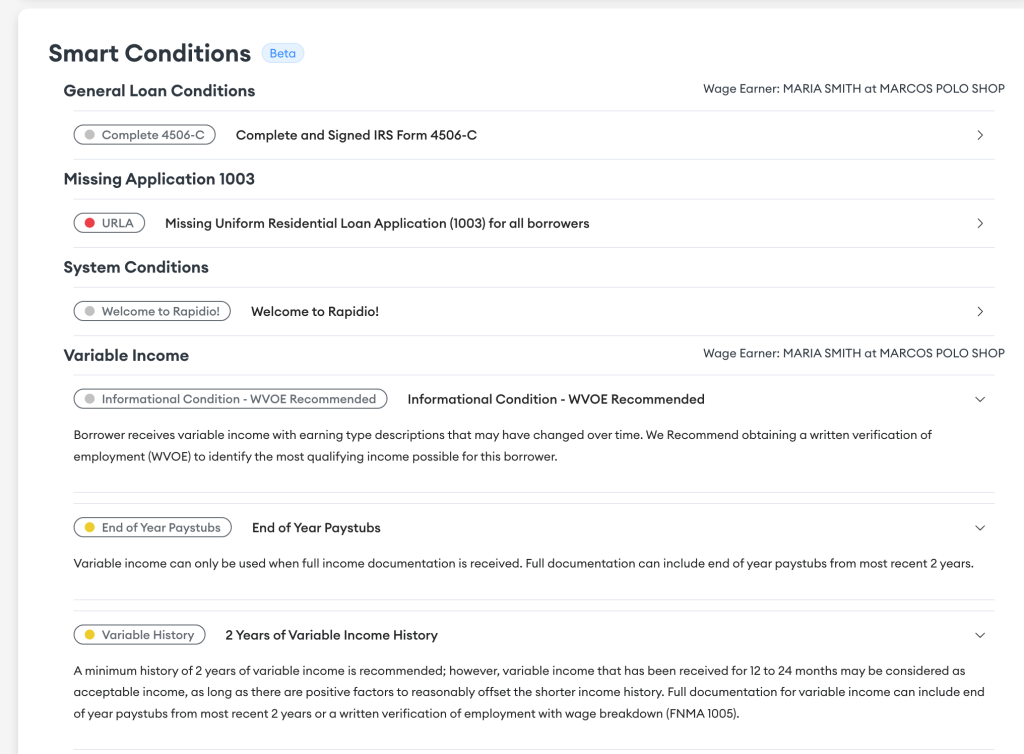
Rapidio helps teams surface common follow-up items for wage earner files before underwriting discovers them later.
Example Smart Conditions
Most Recent 30 Days of Paystubs
Most Recent 2 Years of W-2s
Written Verification of Employment
Year-to-Date Income Review
Overtime / Bonus History Review
Missing or Incomplete 1003
How Smart Conditions work inside Rapidio
Upload borrower documents
Rapidio starts with the file your team is already reviewing.
Income is analyzed
The scenario and available supporting documentation are evaluated.
Smart Conditions are surfaced
Relevant follow-up items and likely next-step requests are generated for the team.
Your team acts earlier
Processors, brokers, or ops staff can resolve issues before underwriting becomes the choke point.
A cleaner file moves forward
The result is a more prepared file, clearer action, and a smoother path through review.
Customers reviews
Trusted by mortgage teams:
Why teams use Smart Conditions
Fewer re-asks
Know what to request earlier instead of discovering gaps after another review cycle.
Fewer touches per loan
Reduce repeated file handling across loan officers, processors, and underwriters.
Cleaner submissions
Send files forward in a more complete and review-ready state.
More consistency across teams
Give branches and team members a more repeatable workflow instead of relying on memory alone.
Better underwriting flow
Help underwriters spend more time on true risk review and less time on avoidable file cleanup.
Frequently Asked Questions (FAQ)
Most frequent questions and answers
Smart Conditions are automatically generated follow-up items that help mortgage teams identify what may need to be reviewed, clarified, or collected before a file moves further through underwriting.
A checklist is static. Smart Conditions are more dynamic and are meant to reflect the actual file, income scenario, and supporting documents under review.
No. Smart Conditions are designed to help teams surface issues earlier and prepare cleaner files. Final underwriting review still matters.
They are designed to help teams catch likely follow-up items earlier, which can reduce avoidable re-asks and unnecessary touches.
No. They can help with both standard and more complex scenarios by making next steps clearer before underwriting.
Loan officers, brokers, processors, underwriters, and operations leaders all benefit when files move forward with better upfront preparation.
Yes – Rapidio is built to support mortgage teams that want a faster, more structured workflow. For workflow and integration questions, your team can contact Rapidio for the best setup.
Because income is one of the biggest sources of delays, documentation requests, and preventable rework in mortgage processing.
Stop finding income issues too late
See how Rapidio helps your team calculate income, surface Smart Conditions, and prepare cleaner files before underwriting slows everything down.
Want to see Smart Conditions on a real file? We’ll walk you through it.